
Medical AI Helper
An AI-powered medical PDF assistant that helps users understand complex medical documents through intelligent analysis and summarisation.
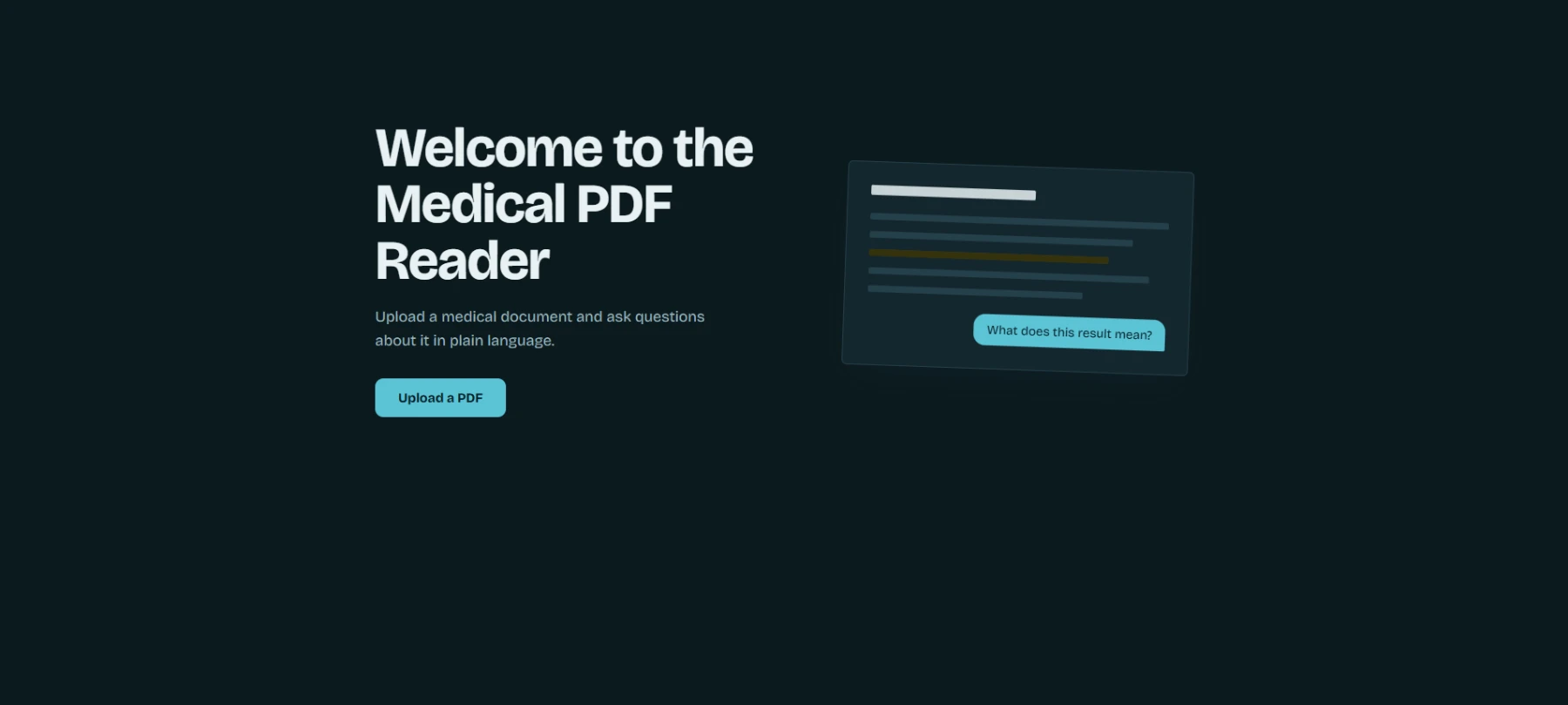
Demo video
What it does
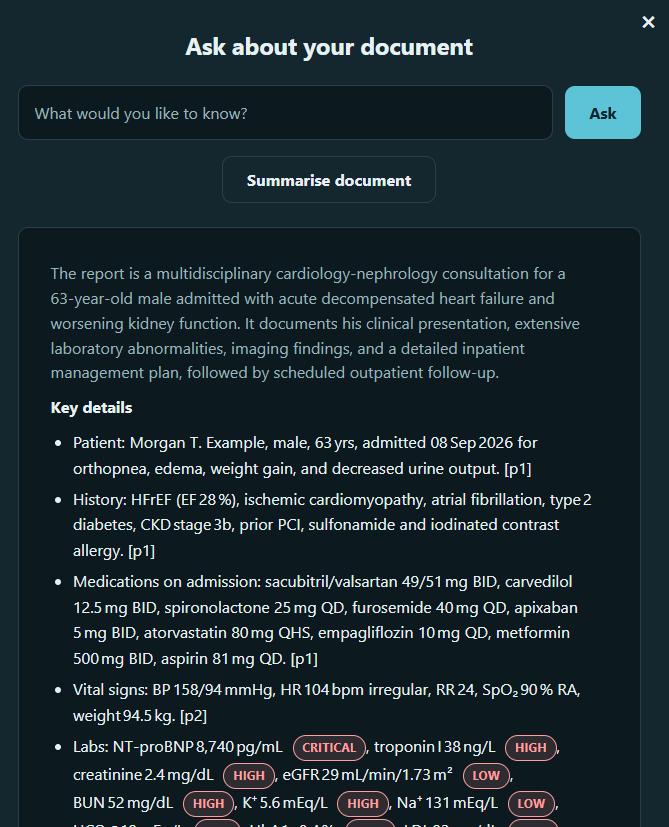
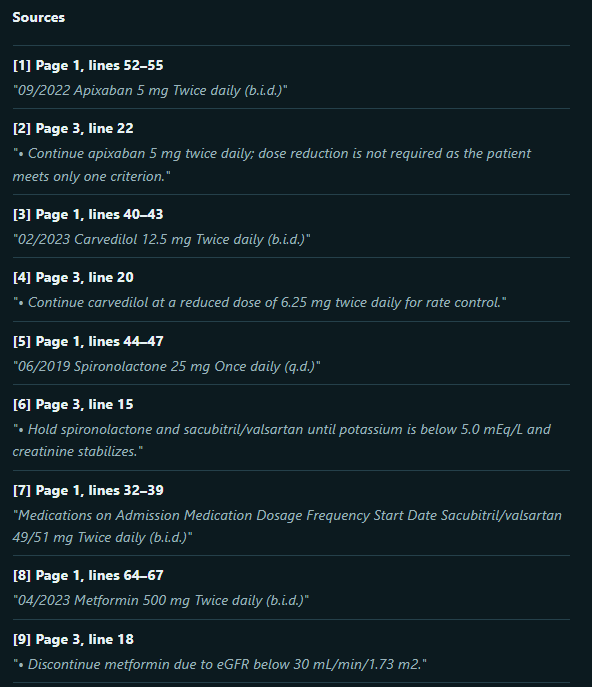
My medical AI analyses medical text, symptoms, and documents using an AI model. It can summarize clinical notes, extract key medical information, classify symptoms, and provide structured insights to help users understand medical content more easily. It offers real‑time responses through a FastAPI backend and a simple HTML/JavaScript frontend. It is designed for students, patients, and anyone who wants clearer explanations of medical information. It helps people who struggle to understand complex medical text by breaking it down into simple, readable insights. It helps medical patients, health‑literacy groups, and individuals who need accessible explanations of medical information. This project is not tied to a business or nonprofit , it is built to support patients directly by improving their understanding of medical content.
Inspiration
The idea honestly came from my dad. He’s always getting medical letters, reports, and documents that are written in super complicated medical language. Every time he gets one, he sits there confused, trying to figure out what it actually means, and I end up helping him break it down. After a while, I realised he’s probably not the only one dealing with this. A lot of medical patients get overwhelmed by the way doctors write things — it’s full of long terms, abbreviations, and explanations that feel like they’re meant for other doctors, not regular people. Seeing my dad struggle with something that’s supposed to help him made me want to build something that actually makes medical information easier to understand. I wanted to create an AI that talks like a human, not a textbook. Something that can take a complicated medical document and explain it in simple, everyday language so patients don’t feel lost or stressed. The whole project basically started because I wanted to make things easier for him, and then I realised it could help a lot of other people too.
How we built it
We built this project by combining a FastAPI backend with a simple HTML, CSS, and JavaScript frontend. The backend handles all of the AI processing and connects to a HuggingFace model that acts as our medical text classifier. This classifier analyses symptoms, medical phrases, and document excerpts, and then returns structured insights that are easier for patients to understand. FastAPI allowed us to create clean API endpoints that the frontend can call directly. On the frontend side, JavaScript sends the user’s input to the backend and displays the classifier’s results in a clear, readable format. Throughout development, we tested the system with real medical documents to ensure the explanations were accurate, consistent, and patient‑friendly. The overall build focused on creating a smooth pipeline from user input → HuggingFace classifier → simplified medical output.
Challenges we ran into
One of the biggest challenges we faced during development was that a collaborator left early in the project, which turned it into a solo build. This meant I had to take on responsibilities I wasn’t originally prepared for, especially on the backend side. I had very limited experience with FastAPI and almost no prior knowledge of integrating HuggingFace models, so getting the classifier to run reliably was a major learning curve. Setting up the API routes, handling requests, and making sure the HuggingFace model responded correctly all took much longer than expected. I also ran into issues with model compatibility, environment setup, and understanding how to structure the backend so the frontend could communicate with it smoothly. Despite these challenges, working through them helped me learn a lot about backend development, API design, and machine‑learning integration.
What's next
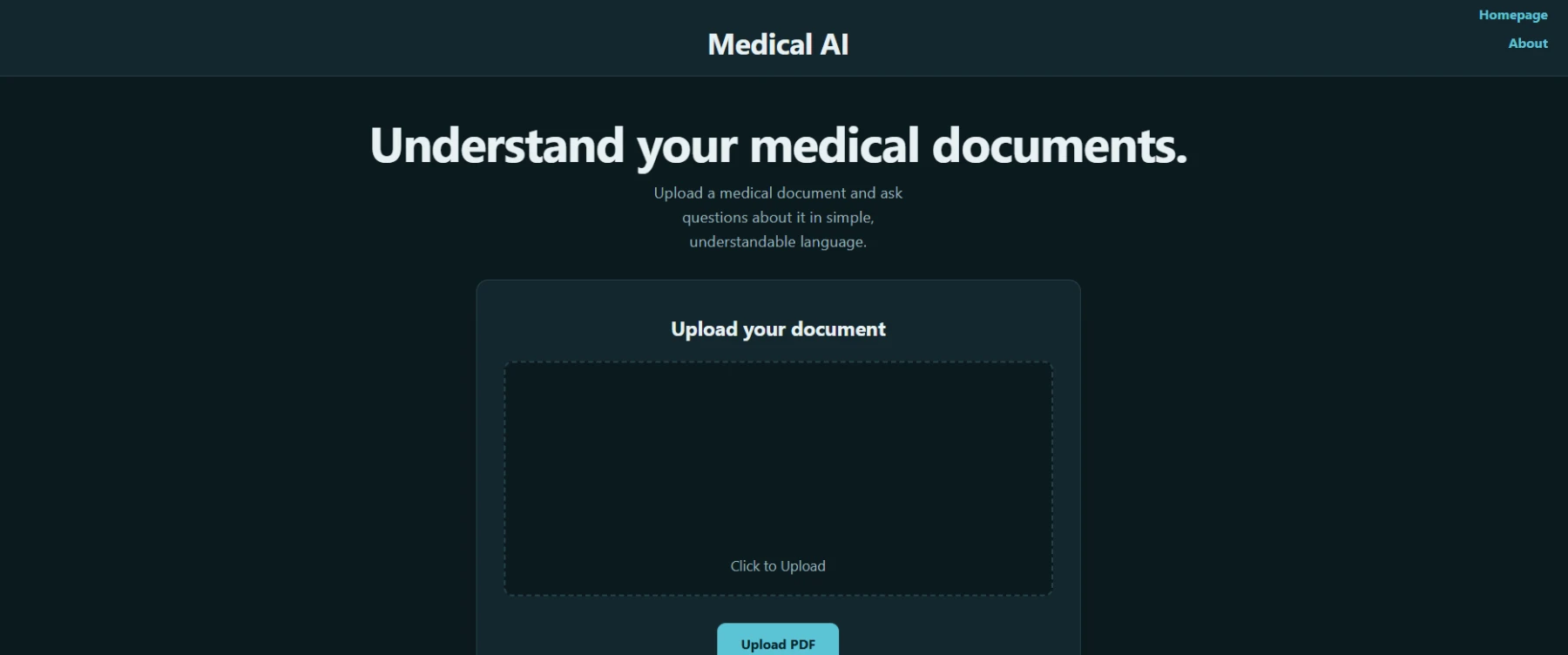
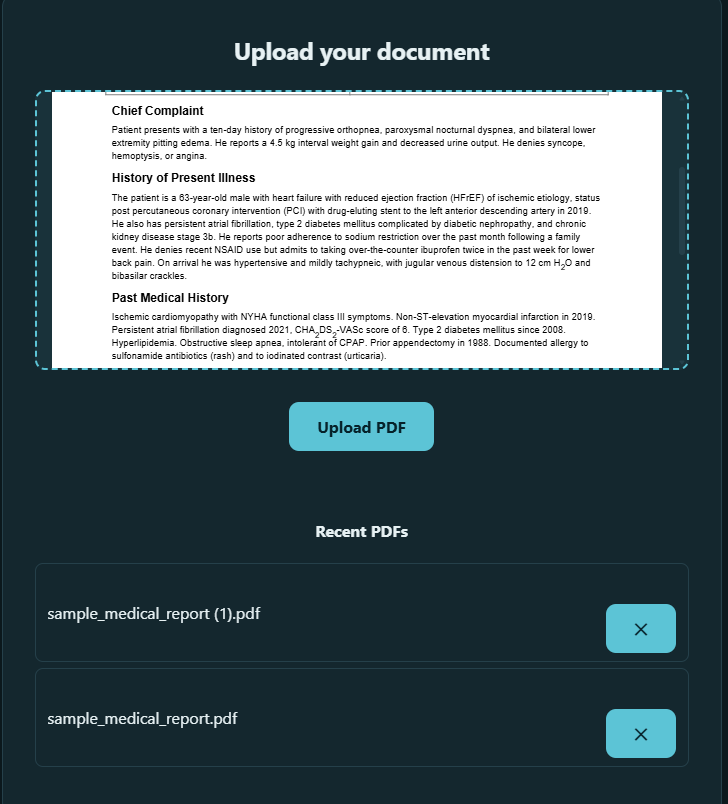
Next, I plan to expand the system so it can handle more types of medical content and provide even clearer explanations for patients. I want to improve the HuggingFace classifier by training or fine‑tuning it on a larger set of medical examples, which would make the results more accurate and more helpful. I also aim to build a cleaner, more user‑friendly interface so patients can upload documents, view summaries, and interact with the AI more easily. In the future, I hope to add support for multiple languages and accessibility features so people who struggle with reading or medical terminology can benefit from it. Overall, the goal is to keep improving the tool until it becomes something patients can rely on to better understand their own medical information.
Screenshots
0 comments
Sign in to upvote this project or leave the team a comment.